
Anúncios
Learning to play the accordion opens up a world of musical expression, cultural richness, and creative possibilities that few instruments can match.


The accordion is a unique and versatile instrument that has enchanted audiences across continents for generations. From European folk traditions to Latin American rhythms, from French café melodies to contemporary pop arrangements, this bellows-driven instrument continues to captivate musicians and listeners alike.
Whether you’re drawn to the soulful sounds of tango, the lively beats of polka, or the melancholic tones of French musette, the accordion offers a gateway into diverse musical landscapes. With dedication, patience, and the right approach, anyone can master this beautiful instrument and join the ranks of accordion enthusiasts worldwide.
🎵 Understanding the Accordion: Types and Characteristics
Before diving into learning techniques, it’s essential to understand what type of accordion suits your musical goals. The instrument comes in several varieties, each with distinct features and applications.
The piano accordion features a piano-style keyboard on the right side, making it accessible for those familiar with piano layouts. This type is popular in jazz, classical, and contemporary music. The left side contains bass buttons that produce chords and bass notes, creating harmonic accompaniment.
The button accordion, also called chromatic button accordion, uses buttons instead of piano keys. This configuration allows for faster finger movements and is common in European folk music, particularly in France, Italy, and Russia. Many professional accordionists prefer this type for its ergonomic advantages.
Another variant is the diatonic accordion, which produces different notes when pushing or pulling the bellows. This type is prevalent in Irish, Mexican, and Cajun music traditions. Its simpler structure makes it easier for beginners in certain folk genres.
Choosing Your First Accordion 🎹
Selecting your first accordion requires careful consideration of several factors. Size matters significantly—accordions come in various sizes, from small 12-bass models suitable for children to full-size 120-bass instruments for advanced players.
For beginners, a 48-bass or 72-bass piano accordion offers a good balance between versatility and manageability. These models provide enough bass buttons to play most songs while remaining lighter and more affordable than professional instruments.
Quality matters more than brand when starting out. Look for an instrument with responsive keys, smooth bellows action, and no air leaks. Testing the instrument before purchasing is ideal, but if buying online, ensure there’s a return policy.
🎼 Fundamental Techniques for Accordion Playing
Mastering the accordion requires developing several simultaneous skills. Unlike many instruments where you focus on one hand at a time, accordion playing demands coordination between both hands and controlled breathing through bellows movement.
Posture and positioning form the foundation of good accordion technique. Sit upright with the accordion resting comfortably on your left leg. The instrument should be secured with shoulder straps adjusted so the keyboard sits at chest level, allowing easy access without straining your arms or shoulders.
Your right hand operates the melody keyboard while your left hand controls bass buttons and bellows direction. The bellows act as the accordion’s lungs, and learning to control air flow smoothly is crucial for maintaining consistent tone quality.
Bellows Control: The Heart of Accordion Expression 💨
Bellows technique separates mediocre accordion players from expressive musicians. Think of the bellows as your breath—smooth, controlled, and intentional. Begin by practicing opening and closing the bellows without playing notes, focusing on steady, even pressure.
Changing bellows direction should be imperceptible to listeners. Practice transitioning smoothly at natural phrase breaks in melodies. Advanced players can create dynamic swells and emotional emphasis through subtle bellows manipulation.
Start with simple exercises: hold a single note while changing bellows direction several times, maintaining consistent volume. This exercise builds the muscle memory necessary for seamless playing.

📚 Reading Music and Understanding Accordion Notation
While some folk accordionists learn by ear, reading music opens doors to vast repertoires and faster learning. Accordion music is typically written on a grand staff, similar to piano music, with treble clef for the right hand and bass clef for the left.
The right-hand notation follows standard musical notation. If you play piano, this transition feels natural. The left-hand notation, however, uses a specialized system representing chord buttons and bass notes rather than individual pitches.
Common left-hand notation symbols include letters indicating bass notes (C, F, G, etc.) and symbols for chord types—major chords, minor chords, seventh chords, and diminished chords. Learning this system takes practice but becomes intuitive with regular use.
Building Your Repertoire Step by Step 🎶
Start with simple melodies you already know. Children’s songs, folk tunes, and hymns provide excellent beginner material. These familiar melodies allow you to focus on technique rather than learning new notes.
Progress gradually to pieces that incorporate left-hand accompaniment. Begin with songs requiring only one or two chords, then expand to more complex harmonic progressions. Classical accordion methods like Palmer-Hughes or Anzaghi provide structured progression through increasing difficulty levels.
As you advance, explore different musical genres. Each style offers unique technical challenges and expressive opportunities. French musette develops your rhythmic precision, while classical arrangements build finger independence and musical interpretation skills.
⚡ Essential Exercises for Skill Development
Consistent practice with focused exercises accelerates your accordion journey. Dedicate at least 20-30 minutes daily to structured practice rather than sporadic longer sessions.
Right-hand finger exercises build dexterity and independence. Practice scales in all major and minor keys, starting slowly and gradually increasing tempo. Use a metronome to maintain steady rhythm and develop timing precision.
The five-finger pattern exercise is fundamental: play C-D-E-F-G-F-E-D-C repeatedly, ensuring each note sounds clearly. Transpose this pattern to all keys to develop familiarity across the keyboard.
Left-Hand Coordination Drills 🎯
The left-hand bass buttons present a unique challenge since you can’t see them while playing. Developing tactile memory is essential. Start by memorizing the button layout through repetition without looking.
Practice the Stradella bass system pattern: bass notes are arranged in the circle of fifths, with corresponding chord buttons positioned in regular rows. Understanding this geometric arrangement makes navigation logical rather than random.
A foundational exercise involves playing bass-chord patterns: press the bass note followed by its major chord, establishing the rhythm foundation used in countless accordion pieces. Practice this pattern in different keys and tempos.
🌟 Overcoming Common Beginner Challenges
Every accordionist faces similar obstacles during the learning journey. Recognizing these challenges helps you address them effectively rather than becoming discouraged.
Air leakage frustrates many beginners. If notes fade quickly or the bellows close on their own, your accordion likely has leaks. While professional repair may be necessary, ensure you’re pressing keys fully and releasing them completely, as incomplete key presses cause air waste.
Coordinating both hands simultaneously feels overwhelming initially. Practice hands separately before combining them. Master the right-hand melody confidently, then add simple left-hand accompaniment gradually.
Managing Physical Discomfort and Building Endurance 💪
The accordion’s weight and playing position can cause shoulder, back, or arm strain, especially during extended practice sessions. Proper posture prevents most discomfort—keep your back straight, shoulders relaxed, and avoid hunching over the instrument.
Take regular breaks during practice. Five minutes of rest every twenty minutes prevents fatigue and maintains focus. Stretching exercises for shoulders, wrists, and fingers before playing prepare your body for the physical demands.
Build endurance gradually. If holding the instrument for ten minutes feels exhausting, that’s normal initially. Your strength and stamina will increase with consistent practice over weeks and months.
🎭 Exploring Different Musical Styles on Accordion
The accordion’s versatility across musical genres is remarkable. Each style offers distinct technical demands and cultural contexts that enrich your musical understanding.
Traditional European folk music showcases the accordion’s heritage. French musette features swinging rhythms and characteristic vibrato effects. Italian tarantella demands rapid finger work and energetic bellows action. Irish ceili music requires crisp articulation and ornamental techniques.
Latin American styles like tango, cumbia, and vallenato place the accordion at the melodic center. These genres emphasize passionate expression, rhythmic vitality, and improvisational elements that challenge intermediate and advanced players.
Contemporary and Classical Accordion Music 🎼
Modern classical composers have written substantial accordion repertoire, treating it as a serious concert instrument. Works by composers like Sofia Gubaidulina, Vladislav Zolotaryov, and Astor Piazzolla demonstrate the instrument’s expressive range beyond folk applications.
Contemporary pop and rock musicians increasingly incorporate accordion for its distinctive sound. Learning to adapt popular songs for accordion develops arrangement skills and broadens your musical versatility.
Jazz accordion playing requires understanding improvisation, complex harmonies, and swing rhythms. Artists like Art Van Damme and Frank Marocco elevated the accordion’s status in jazz contexts, proving its legitimacy in sophisticated musical settings.
📱 Using Technology to Accelerate Your Learning
Modern technology offers unprecedented resources for accordion students. Mobile apps provide practice tools, sheet music libraries, and interactive learning experiences that complement traditional instruction methods.
Virtual accordion apps let you practice finger patterns and familiarize yourself with button layouts without carrying your physical instrument everywhere. These apps are particularly useful for memorizing left-hand bass patterns and testing chord progressions.
Video platforms like YouTube host countless tutorial series covering everything from absolute beginner lessons to advanced technique demonstrations. Watching professional accordionists perform helps develop musical taste and technical understanding.
Online Communities and Learning Resources 🌐
Joining online accordion communities connects you with fellow learners and experienced players worldwide. Forums, Facebook groups, and Reddit communities offer advice, encouragement, and answers to specific technical questions.
Many professional accordionists offer online lessons via video conferencing, making quality instruction accessible regardless of your location. This option is particularly valuable if local accordion teachers are scarce in your area.
Sheet music repositories and digital libraries provide access to thousands of arrangements. Websites dedicated to accordion music offer both free and paid scores spanning all genres and difficulty levels.
🏆 Setting Goals and Measuring Your Progress
Establishing clear, achievable goals maintains motivation throughout your accordion journey. Rather than vague aspirations like “get better,” set specific, measurable objectives.
Short-term goals might include mastering a particular scale, learning three new songs this month, or playing a piece without mistakes at a specific tempo. These concrete targets provide satisfaction when achieved and clear direction for practice sessions.
Long-term goals could involve performing at a local open mic, joining an accordion ensemble, or mastering a challenging classical piece. Recording yourself regularly documents progress that daily practice might obscure—comparing recordings from months apart reveals improvement that feels gradual in the moment.
The Importance of Performance and Sharing Your Music 🎤
Playing for others transforms practice into meaningful musical communication. Start small—perform for family or friends in comfortable settings. As confidence builds, seek opportunities at community events, nursing homes, or local festivals.
Performance anxiety affects nearly all musicians. Preparation and experience are the most effective remedies. The more you play for others, the more natural it becomes. Remember that audiences appreciate the music and effort more than they notice small mistakes.
Recording and sharing your playing online through social media or video platforms creates accountability and connects you with a supportive audience. Positive feedback encourages continued growth, while constructive criticism helps identify areas needing attention.
🎓 Finding the Right Teacher or Learning Method
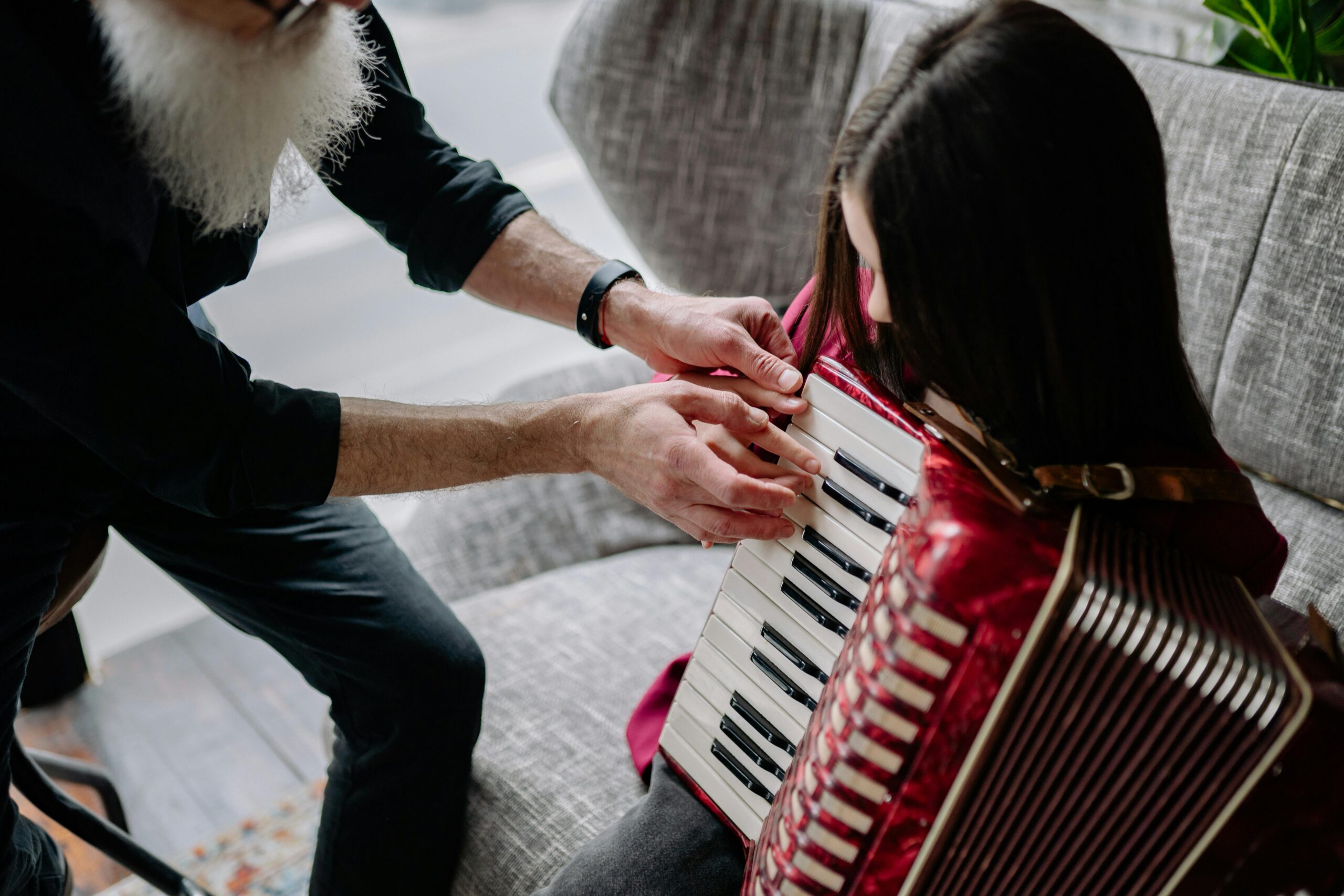
While self-teaching is possible with dedication and resources, working with an experienced teacher accelerates progress and prevents developing bad habits that become difficult to correct later.
A good accordion teacher provides personalized feedback, corrects technical issues immediately, and designs curriculum matching your learning pace and musical interests. If in-person teachers aren’t available locally, online instruction offers a viable alternative.
When self-teaching, structure is crucial. Follow established method books that progress logically through skills and concepts. Popular accordion methods include Palmer-Hughes, Hohner, and Scandalli series, each offering systematic approaches to learning.
🎉 Embracing the Accordion Journey with Patience and Joy
Learning any musical instrument requires patience, persistence, and perspective. Progress isn’t always linear—you’ll experience breakthroughs and plateaus, moments of frustration and pure joy.
Remember that every accomplished accordionist started exactly where you are now, struggling with bellows control, memorizing button positions, and coordinating both hands. What separates those who succeed from those who quit is simply continued effort over time.
Celebrate small victories: the first time you play a song from memory, when a difficult passage suddenly clicks, or when someone recognizes the tune you’re playing. These moments make the challenging aspects worthwhile.
The accordion community is welcoming and supportive. Fellow players understand the instrument’s challenges and celebrate its unique charms. Attend accordion festivals, workshops, and concerts when possible to immerse yourself in this vibrant musical culture.
Most importantly, maintain joy in the learning process. Play music you love, experiment with different styles, and allow yourself to make mistakes. The accordion’s expressive voice rewards those who approach it with curiosity, dedication, and an open heart. Your musical journey is uniquely yours—embrace it fully and enjoy every note along the way.
