
Anúncios
Learning to play the accordion opens up a world of musical expression, connecting you to rich cultural traditions while offering endless creative possibilities.


The accordion is a fascinating instrument that has captivated musicians across genres, from folk and traditional music to jazz, classical, and even rock. Its unique sound and portable nature make it an excellent choice for anyone looking to explore a new musical journey.
Whether you’re drawn to the nostalgic melodies of French musette, the energetic rhythms of polka, or the soulful tones of tango, the accordion provides a versatile platform for musical exploration. With dedication and the right approach, anyone can master this beautiful instrument.
🎵 Understanding the Accordion: Types and Components
Before diving into playing techniques, it’s essential to understand what type of accordion best suits your musical goals. The instrument comes in several varieties, each with distinct characteristics and applications.
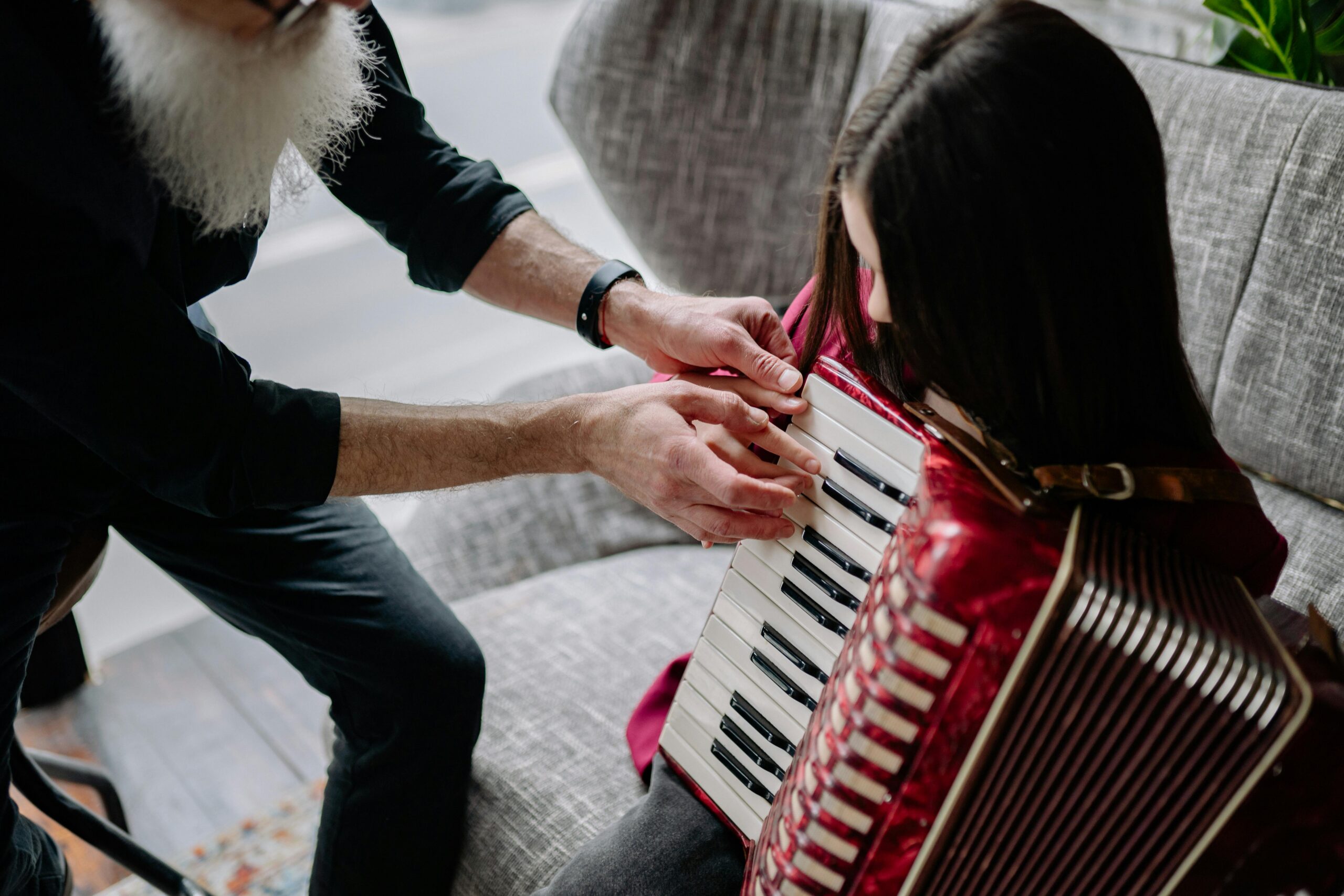
The piano accordion features a keyboard similar to a piano on the right side, making it intuitive for those with piano experience. The button accordion, on the other hand, uses buttons on both sides and is popular in folk traditions worldwide. Diatonic accordions are smaller and limited to specific keys, commonly used in regional music styles.
Each accordion consists of three main sections: the right-hand keyboard or buttons for melody, the left-hand bass buttons for accompaniment, and the bellows in the middle that create airflow. Understanding how these components work together is fundamental to producing beautiful music.
🎹 Getting Started: Proper Posture and Holding Technique
Establishing correct posture from the beginning prevents physical strain and enables better control over your instrument. Sit upright on a chair without armrests, keeping your feet flat on the floor and your back straight but relaxed.
The accordion should rest comfortably on your left thigh, with the bass strap securing your left hand and the shoulder straps adjusted to distribute weight evenly. Your right arm should move freely across the keyboard without tension in your shoulder or wrist.
Proper bellows technique is crucial for sound production. The bellows should open and close smoothly, controlled by your left arm’s gentle pushing and pulling motions. Avoid jerky movements, as smooth bellows control directly affects tone quality and dynamics.
✋ Mastering the Right Hand: Melody and Keyboard Navigation
The right hand produces the melody on the accordion, requiring coordination, finger strength, and spatial awareness. Begin by familiarizing yourself with the keyboard layout, identifying middle C and understanding the relationship between keys.
Start with simple five-finger exercises to build dexterity and muscle memory. Practice scales slowly, paying attention to finger positioning and maintaining curved fingers over the keys. Your thumb should pivot naturally when moving between positions.
Focus on playing single notes cleanly before attempting chords. Listen carefully to each note’s quality, ensuring proper bellows pressure maintains consistent volume. As you progress, incorporate simple melodies like “Mary Had a Little Lamb” or folk tunes to apply your developing skills.
🎼 Left Hand Fundamentals: Bass Buttons and Chord Accompaniment
The left-hand bass system can initially seem complex, but it follows logical patterns that become intuitive with practice. Most accordions use the Stradella bass system, featuring rows of bass notes and preset chord buttons arranged systematically.
The bass buttons closest to the bellows typically contain the fundamental bass notes. Moving outward, you’ll find rows for major chords, minor chords, seventh chords, and diminished chords. Learning this layout enables you to accompany melodies with rich harmonic support.
Begin by locating the reference button, usually marked with a dimple or indentation. This C bass note serves as your anchor point for navigation. Practice finding bass notes and their corresponding chords without looking, developing tactile memory through repetition.

📚 Essential Practice Routines for Accordion Players
Consistent, focused practice is the foundation of accordion mastery. Establishing effective practice routines accelerates your progress and prevents frustration. Quality always trumps quantity when it comes to practice time.
Dedicate the first five to ten minutes of each session to warm-up exercises. Play scales, arpeggios, and finger independence drills to prepare your muscles and mind. This preparation improves performance and reduces injury risk.
Break your practice into focused segments: technical exercises, repertoire learning, and creative exploration. Spend time on challenging passages using slow, deliberate repetition. Gradually increase tempo only when you can play a section perfectly at a slower speed.
Recording yourself regularly provides valuable feedback that your ears might miss while playing. Listen critically to your recordings, noting areas for improvement in timing, dynamics, and expression. This self-assessment accelerates your development significantly.
🎶 Reading Sheet Music for Accordion
Understanding musical notation is essential for accessing the vast repertoire available for accordion. Accordion music typically uses the grand staff, with treble clef for the right hand and bass clef for the left hand.
The right-hand notation looks identical to piano music, showing individual notes, chords, and articulations. The left-hand notation may use traditional bass clef or specialized accordion notation showing bass notes and chord symbols.
Start with simple pieces featuring whole notes and half notes, gradually introducing quarter notes and eighth notes as your reading improves. Practice sight-reading regularly with material slightly below your technical level to build confidence and fluency.
💡 Bellows Control: The Heart of Accordion Expression
Bellows technique separates adequate accordion players from expressive, captivating performers. The bellows function like a violinist’s bow or a singer’s breath, directly controlling dynamics, phrasing, and emotional impact.
Practice bellows exercises independently from playing notes. Open and close the bellows at various speeds while maintaining consistent pressure. Work on creating smooth transitions between direction changes without audible bumps or interruptions.
Experiment with bellows shakes, a technique where you rapidly alternate direction to create a tremolo effect. Learn when to change bellows direction within phrases, typically at natural breathing points in the melody. Strategic bellows changes enhance musical expression dramatically.
🌟 Developing Your Unique Sound and Style
As you gain technical proficiency, focus on developing your personal musical voice. Listen extensively to accordion masters across different genres, analyzing their interpretative choices, articulation, and stylistic elements.
Experiment with different musical genres to discover what resonates with your musical personality. Try traditional folk music, classical transcriptions, jazz standards, or contemporary compositions. Each style teaches valuable techniques and expands your versatility.
Don’t rush through pieces to add them to your repertoire. Instead, deeply explore fewer pieces, understanding their structure, historical context, and emotional content. This depth of study creates meaningful performances that connect with audiences.
🎯 Common Challenges and How to Overcome Them
Every accordion student encounters obstacles along their learning journey. Recognizing common challenges and knowing how to address them prevents discouragement and maintains momentum.
Coordinating both hands simultaneously challenges many beginners. Practice hands separately until each part becomes comfortable, then combine them at a very slow tempo. Gradually increase speed as coordination improves, never sacrificing accuracy for speed.
Physical fatigue is normal when starting out. The accordion’s weight and constant arm movement require muscles you haven’t previously developed. Take regular breaks during practice, and build stamina gradually through consistent sessions rather than marathon practices.
Navigating the bass buttons without looking frustrates many learners. Use tactile landmarks like the reference button and row indentations. Practice with your eyes closed to strengthen kinesthetic awareness, trusting your fingers to find their destination.
👥 Learning Resources: Teachers, Apps, and Communities
While self-teaching is possible, working with an experienced accordion teacher accelerates progress and prevents bad habits from forming. A qualified instructor provides personalized guidance, corrects technical errors, and offers motivation during challenging periods.
Online resources have revolutionized accordion learning. Video tutorials, interactive apps, and digital sheet music libraries provide accessible, affordable learning materials. Many platforms offer structured courses progressing from beginner to advanced levels.
Joining accordion communities, whether local clubs or online forums, connects you with fellow enthusiasts who share advice, encouragement, and performance opportunities. These connections enrich your musical journey and provide valuable networking opportunities.
🎭 Performance Skills: Sharing Your Music with Others
Playing accordion is ultimately about communication and connection. Developing performance skills transforms technical ability into meaningful musical experiences that touch listeners’ hearts.
Start performing for supportive audiences like family and friends before progressing to more formal settings. These low-pressure opportunities build confidence and help you manage performance anxiety naturally.
Prepare thoroughly for performances by practicing in performance conditions. Play through your entire program without stopping, imagining an audience present. This mental rehearsal prepares you for the psychological aspects of live performance.
Remember that mistakes happen to everyone, even professionals. Learn to recover gracefully from errors without stopping or showing frustration. Audiences remember your overall expression and musicality far more than minor technical slips.
🔧 Accordion Maintenance and Care
Proper instrument care ensures your accordion remains in optimal playing condition for years. Regular maintenance prevents costly repairs and preserves sound quality.
Store your accordion in a temperature-controlled environment away from extreme heat, cold, or humidity. Use a quality case for protection during transport and storage. Never leave your instrument in a car where temperature fluctuations can damage delicate components.
Clean the exterior regularly with a soft, dry cloth. Avoid using chemical cleaners that might damage finishes or celluloid. Keep the keyboard clean by wiping keys after playing to prevent buildup from skin oils.
Schedule annual professional maintenance with a qualified accordion technician. They’ll tune reeds, check for air leaks, adjust straps, and address minor issues before they become major problems. This preventive care protects your investment.
🚀 Advanced Techniques to Explore
Once you’ve mastered fundamentals, exploring advanced techniques adds depth and sophistication to your playing. These skills distinguish intermediate players from advanced musicians.
Register changes alter your accordion’s tonal color by engaging different reed sets. Learning when and how to change registers creates orchestral variety within a single instrument. Practice smooth register transitions that don’t interrupt musical flow.
Counterpoint and polyphonic playing involve independent melodic lines in each hand. This classical technique, borrowed from organ and harpsichord music, showcases the accordion’s versatility and challenges your coordination significantly.
Free bass systems, found on some accordions, allow individual bass note selection rather than preset chords. This configuration enables playing classical repertoire originally written for piano or organ with full harmonic freedom.
🌍 Cultural Traditions and Musical Heritage
The accordion holds special significance in countless musical traditions worldwide. Exploring these cultural contexts enriches your understanding and interpretation of accordion music.
French musette features characteristic waltz rhythms and nostalgic melodies associated with Parisian cafés. Italian folk music showcases the accordion in tarantellas and other dance forms. Irish traditional music incorporates button accordion with distinctive ornamentation.
Tango music from Argentina features the bandoneón, an accordion cousin, creating passionate, dramatic soundscapes. Tejano and conjunto music from Texas and Mexico place accordion at the center of energetic dance music.
Understanding these traditions informs your interpretative choices and connects you to generations of accordion players who’ve shaped each style’s development. This historical awareness deepens your musical authenticity.
📈 Tracking Your Progress and Setting Goals
Maintaining motivation requires clear goals and methods to measure progress. Establishing both short-term and long-term objectives creates a roadmap for your accordion journey.
Keep a practice journal documenting what you work on, challenges encountered, and breakthroughs achieved. This record provides perspective on your development and helps identify patterns in your learning process.
Set specific, achievable goals like learning a particular piece, mastering a technical challenge, or performing at a local event. Break larger goals into smaller milestones, celebrating achievements along the way.
Regularly revisit pieces you’ve previously learned to appreciate how much you’ve improved. This reflection reinforces that persistent effort yields tangible results, motivating continued dedication to your craft.
🎊 The Lifelong Joy of Accordion Playing
Learning accordion is not a destination but an ongoing journey of discovery, expression, and personal growth. Each practice session, performance, and musical connection enriches your life in unexpected ways.
The cognitive benefits of learning music extend beyond the instrument itself. Studies show musical training enhances memory, coordination, and emotional intelligence. These advantages apply throughout your life, regardless of when you begin learning.
The social connections formed through music create lasting friendships and memorable experiences. Whether playing in ensembles, attending festivals, or simply sharing music with loved ones, the accordion opens doors to community and belonging.
Embrace the learning process with patience and curiosity. Some days will feel effortless, while others present frustrating challenges. Both experiences contribute to your development as a musician and as a person. The accordion’s beautiful voice rewards your dedication with a lifetime of musical expression and joy. 🎶
